
New Hanover County Criminal Court Records
A criminal court record is the court's case file, not just the arrest or booking record. In New Hanover County, the criminal case file is kept by the Clerk of Superior Court once charges are filed, calendared, heard, resolved, or appealed in the state court system. It can show the charging document, court dates, bond orders, appearances, motions, pleas, trial settings, verdict or plea outcome, disposition, sentence, probation terms, restitution, costs, and appeal entries.
Felonies are handled in Superior Court. Misdemeanors and infractions begin in District Court, and appeals from District Court misdemeanor or infraction judgments can move to Superior Court for trial de novo. Magistrates handle criminal process, initial appearances, and bond conditions within the District Court system. Court charges and arrest-to-charge details are narrower than the full case file, so detailed charge-status review belongs with court charge records while the full outcome sits in criminal court records.
Search New Hanover County Criminal Records
The primary online search path is the North Carolina eCourts Portal. Use Smart Search for criminal case information and Search Hearings for upcoming or past hearing settings. Public users can search by case number, record number, defendant name, business name where relevant, filing date, case status, and case type filters. The Portal requires JavaScript and cookies, and public users may encounter CAPTCHA checks.
Full criminal court records may require more than an online search. Certified copies, older paper files, or unclear docket entries should be requested through the Clerk of Superior Court at the New Hanover County Courthouse. The New Hanover County Sheriff's Office provides law-enforcement and jail information, but the sheriff's site is not the final source for court dispositions.
Sheriff records can help with custody or booking context, while the court case record remains with the Clerk of Superior Court and eCourts.
- Open Portal Smart Search and search by defendant name, case number, or record number.
- Limit results to New Hanover County when the same name appears in other North Carolina counties.
- Review the case type, case status, court division, hearing entries, and disposition fields.
- Use Search Hearings when the main question is the next court date, courtroom, or judicial officer.
- Request certified criminal court records from the Clerk of Superior Court when an official copy is needed.
New Hanover County Criminal Case Flow
Criminal court records build over time. Early entries may include a warrant, criminal summons, citation, statement of charges, indictment, or information. Later entries can show first appearance, bond hearing, probable cause hearing, arraignment, motions, continuances, trial settings, plea, verdict, disposition, sentence, probation review, and appeal. A single docket may show several charges with different outcomes.
Case flow: Charges Filed › Arraignment › Pretrial and Motions › Plea or Trial › Disposition › Sentencing.
| Stage | What Happens | Record Clue |
|---|---|---|
| Charges Filed | The case begins through warrant, summons, citation, indictment, information, or related process. | Charge, offense, statute, court division, and first setting. |
| Arraignment | The defendant is advised of charges and enters or prepares for a plea. | Appearance, plea, counsel, or scheduling entry. |
| Pretrial | Motions, discovery, bond review, continuances, and probable cause matters may occur. | Motion, order, bond, continuance, or hearing entry. |
| Plea or Trial | The case resolves by plea, trial verdict, dismissal, or other disposition. | Verdict, plea, dismissal, or judgment entry. |
| Sentencing | The court imposes punishment after conviction or plea. | Sentence, probation, fines, costs, restitution, or custody term. |
New Hanover County Criminal Courts
Superior Court and District Court serve different roles in New Hanover County criminal court records. Superior Court handles felony criminal cases and appeals from District Court misdemeanors and infractions. District Court handles misdemeanors, infractions, traffic matters, and many first appearances or lower-level settings. Magistrates issue criminal process, conduct initial appearances, and set release conditions. The District Attorney decides and prosecutes charges for the State after law-enforcement referral or other process.
The District Attorney for Prosecutorial District 6 is Jason Smith, with the office at 316 Princess St, Wilmington, phone 910-772-6610.

Sheriff command contacts can help identify law-enforcement channels, but prosecution and court disposition are separate steps.
| Court or Office | Criminal Record Role |
|---|---|
| Superior Court | Felony case files, superior criminal calendars, and appeals from District Court. |
| District Court | Misdemeanors, infractions, traffic, initial lower-court criminal settings. |
| Magistrates | Criminal process, initial appearances, and release conditions. |
| District Attorney | Prosecution, charging decisions, trial docket preparation, and State representation. |
| Public Defender | Indigent defense for eligible defendants in Defender District 6. |
What New Hanover Criminal Records Show
Criminal court records can include more than a charge name. They may show case number, defendant, filing date, offense description, statute, charge class, court division, arrest or citation connection, bond order, plea, motions, hearing dates, courtrooms, disposition, sentence, probation, restitution, fines, fees, attorney fees, appeal entries, and payment status where eligible. Anonymous Portal views may be thinner than a public terminal or paper file.
| Field | What It Shows |
|---|---|
| Case Number | The criminal court file number or record number tied to the case. |
| Defendant | The person charged in the criminal case. |
| Charge | The alleged offense, statute, class, or charging language as filed or amended. |
| Plea | The defendant's answer to the charge, when shown. |
| Disposition | The outcome, such as guilty, not guilty, dismissed, or other resolution. |
| Sentence | Custody, probation, fines, costs, restitution, or other judgment terms. |
| Hearing Events | Arraignment, motions, trial date, continuance, probation review, or compliance review entries. |
New Hanover Charges vs Convictions
A charge is an accusation filed in court. A conviction is a guilty verdict or guilty plea accepted by the court. New Hanover County criminal court records can show charges that were dismissed, reduced, amended, or ended in not guilty findings. A search result should be read by charge count and disposition, not by assuming every charge resulted in conviction.
| Charge | Conviction | |
|---|---|---|
| Meaning | Allegation filed by complaint, citation, information, indictment, or related process. | Final guilt finding or plea accepted by the court. |
| Record Timing | Appears early in the case and can change. | Appears after plea, verdict, or judgment. |
| Public Reading | Should be paired with current status and disposition. | Should be paired with sentence, appeal, and expunction status. |
New Hanover County Criminal Court Roles
The District Attorney's Office prosecutes criminal cases in District and Superior Courts, represents the State in juvenile proceedings, prepares the criminal trial docket, and advises local law enforcement. New Hanover County is in Prosecutorial District 6 with Pender County. The public defender system is separate. NC IDS lists New Hanover County in Defender District 6, with Chief Public Defender Thomas "Bud" Woodrum II and an office at 320 Chestnut Street, Suite 201.
The NC IDS New Hanover County public defender page and defender directory provide appointed-counsel contact context for criminal court records involving indigent defense.
Note: The prosecutor files and manages the State's case; the clerk keeps the court record and official docket.
New Hanover Criminal Records and Jail
Custody status can be relevant to a criminal case, but it is a separate record channel. The New Hanover County Sheriff's Office operates the Detention Facility at 3950 Juvenile Center Road in Castle Hayne. P2C Inmate Inquiry may show current jail roster fields such as name, primary charge, arrest date, and booking agency. Those fields are booking or custody data, not the final court disposition.
The Detention Division page describes booking, inmate population, visitation, mail, money, and NC SAVAN information.
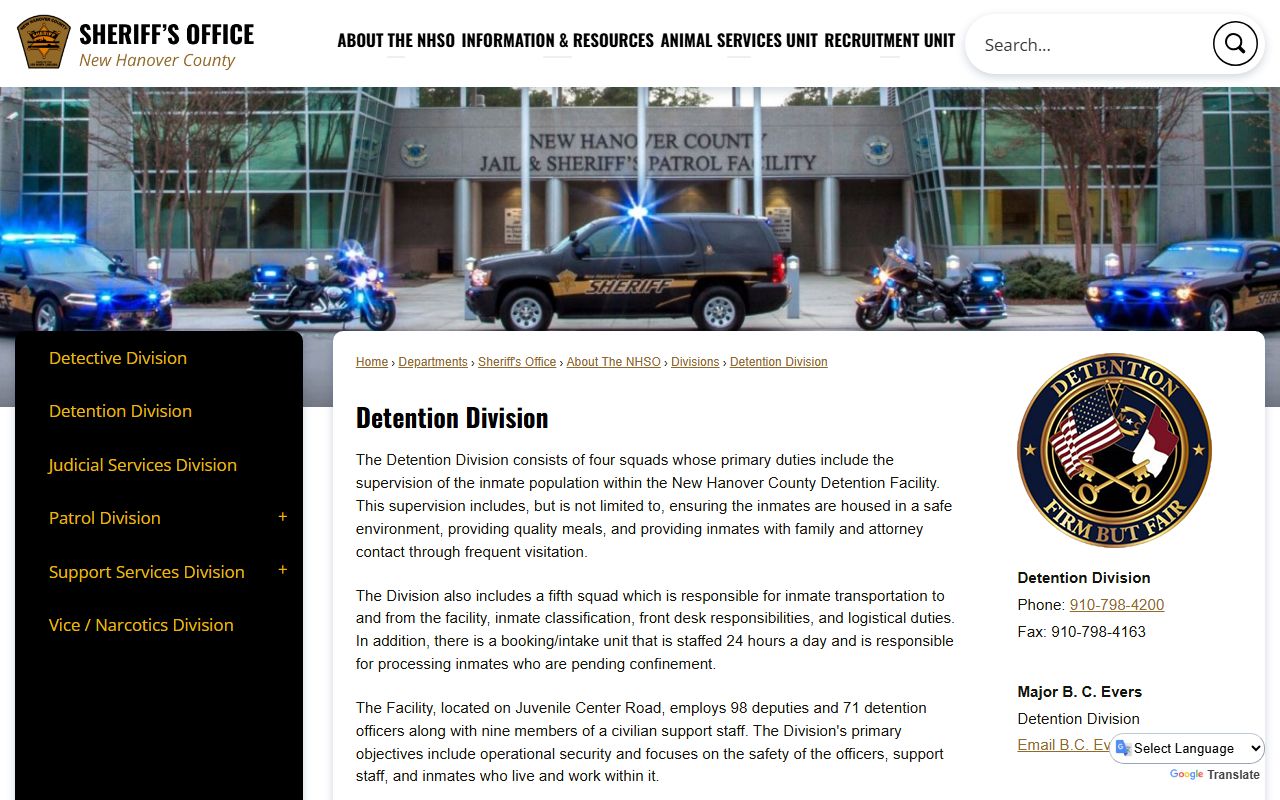
Detention data helps with current custody questions, while New Hanover County criminal court records show the case's court path and outcome.
New Hanover Criminal Court Costs
Criminal court records can include financial obligations such as fines, fees, restitution, criminal attorney fees, and probation or parole fees where eligible. The Portal Make Payments tool can search eligible payments by citation, case, party, business, or driver's license. Mailed eligible payments must be money order or certified check only, payable to New Hanover County Clerk of Superior Court, with the citation number included. No cash or personal checks are accepted by mail.
The current court costs publications provide 2026 PDFs for civil, criminal, estates, and special proceedings costs.
Current cost schedules explain why a New Hanover County criminal court record may show multiple financial entries after disposition.
Restricted New Hanover Criminal Records
Juvenile criminal and delinquency records are generally confidential under Chapter 7B. Sealed and expunged records should not appear in public Portal or public clerk searches. Adoption, mental-health, protected identifier, and certain safety-sensitive records can be restricted or redacted. Criminal investigative records held by law-enforcement agencies are also limited under G.S. 132-1.4, which is separate from court case-file access.
Expunction is a legal process that can clear eligible public criminal records. North Carolina has separate expunction statutes for dismissed or not-guilty charges and for certain nonviolent misdemeanor or felony convictions. G.S. 15A-153 describes the effect of expunction on public records. Eligibility should be checked through official court forms, the Clerk of Superior Court, or legal counsel, not assumed from a public search result.
| Sealed | Expunged | |
|---|---|---|
| Public View | Hidden from public access by law or court order. | Cleared from routine public records after an expunction order. |
| How It Happens | Through a statute, court rule, or sealing order. | Through a petition and court order under eligible statutes. |
| Search Result | May not display or may show limited information. | Should not appear in normal public court searches. |
New Hanover Criminal Record Boundaries
Criminal court records should not be mixed with noncriminal court records or county records that use different custodians. The North Carolina separation and divorce help topic relates to domestic cases, not criminal prosecution.
The distinction matters because divorce judgments and criminal dispositions may both be court records, but they follow different case paths.
The North Carolina estates help topic explains probate, which is handled by the Clerk of Superior Court in a separate estate process.
Estate and probate records use the same clerk office structure, but they are not criminal court records and should be searched by estate or special proceeding context.